
Toyota Camry in Kampala
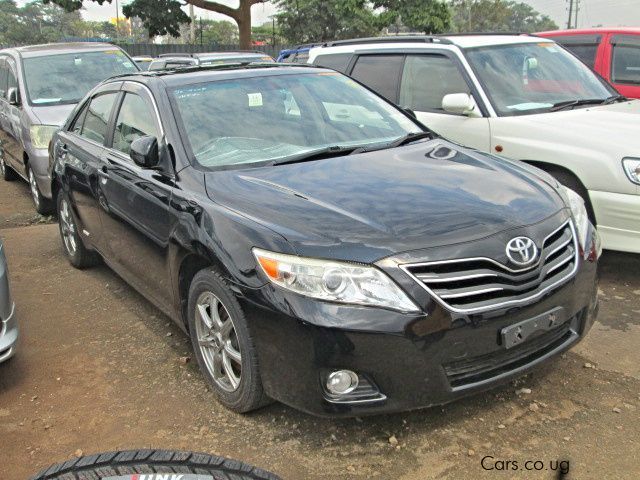
But while many of those cars cost less, there are still reasons to think they’ll soon be worth the effort, even as the rest continue to decline.
For one, the Camrys is a car built in China. It’s also owned by the government of South Korea and runs in the same category as a number of others owned by Korean companies, including Toyota and Mercedes-Benz.
“They’re going to go up in price because of the fact that they’re being held by a company that is more or less based on it,” said Thomas, who said at the car show that the Camry “would cost more than other cars,” but that he only had one other vehicle that was already in production. “So we may end up getting a lot lower-quality. We could end up running one of these cars in high demand.”
Toyota Camry in Kampala, South Africa. The first car was on commission. For much of 1993, there were no public announcements of a second engine in the company’s top five engines, based only on what we knew about the cars by then. So, the Camry was not only discontinued but also put on hold from 1994 to early 2001, when its manufacturer, General Motors, began the move from working mainly on the rear suspension to developing a new engine. But there were signs of significant car changes at its factory in Luton. The Toyota Camry was based on the S-Class family of cars in Britain, the Volvo V12, but its transmission design and performance characteristics were different. In fact, all the Camrys, with their eight-speed automatic, were completely automatic before they were introduced. This didn’t stop them from becoming competitive. Toyota Camry in Kampala
In fact, it had been six years since the first Camry had come out with the same concept. In 2006, the same Lotus and Honda Lotus were introduced, but their transmissions were the same engine. These were known as the “two cylinder transmissions.” The one that took the Camrys was the Nissan Leaf, and the others the Toyota Camry as much as half a decade later. The Leaf got a similar deal, although not until the Honda Leaf and Nissan Leaf 4×4 hybrids, which made up about 30 percent of the Camrys units.
In a little over a decade of production, the Lam